The Adventure
Highlights
Inclusions
Testimonials
Cambodia Tuk Tuk Adventures
The ultimate Cambodian adventure holidays - drive a Tuk-Tuk, explore the country and complete challenges .
Cambodia
Cambodia Adventures
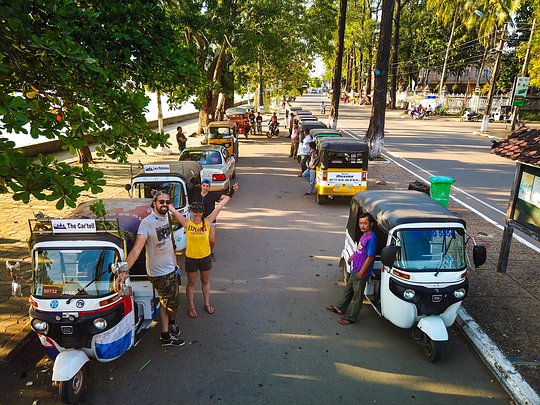
Cambodia
Why is Cambodia so damn amazing?
Short answer: come and find out for yourself. Long answer: it’s like the country that South East Asia left behind. While Thailand and (to an extent) Vietnam are heaving with Bintang-singlet-wearing tourists, Cambodia has a way more laidback feel. Kind of like those countries 20 years ago. The history is also a big drawcard – not only do you have Khmer relics dotted through the jungle like the UNESCO wonder Angkor Wat, you’ve also got the tragic late 20th-century genocide, which still leaves its mark on Cambodian life. Basically: Phuket this is not.
The Highlights
We are sure you want to know more about what really makes this trip unique... so here we go
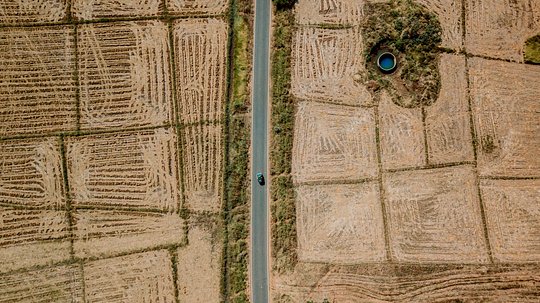
Details
We handle all the boring stuff. We’ll sort out all of your accommodation, hire your vehicles, make sure a big chunk of your entry fee goes towards helping local communities and figure out the route. You’ve just got to drive it.
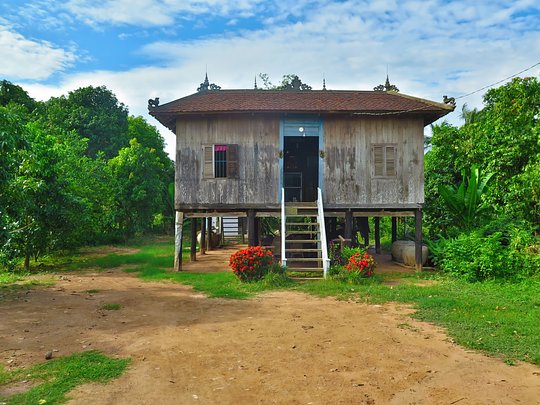
Accommodation
What sets this adventure apart? It's more than just driving through Cambodia; it's about immersing yourself in the heart of the country, connecting with its people, and experiencing its rich culture firsthand. Unlike traditional tours, our adventure takes you off the beaten path, allowing you to stay in homestays and interact with locals, providing a truly authentic experience.
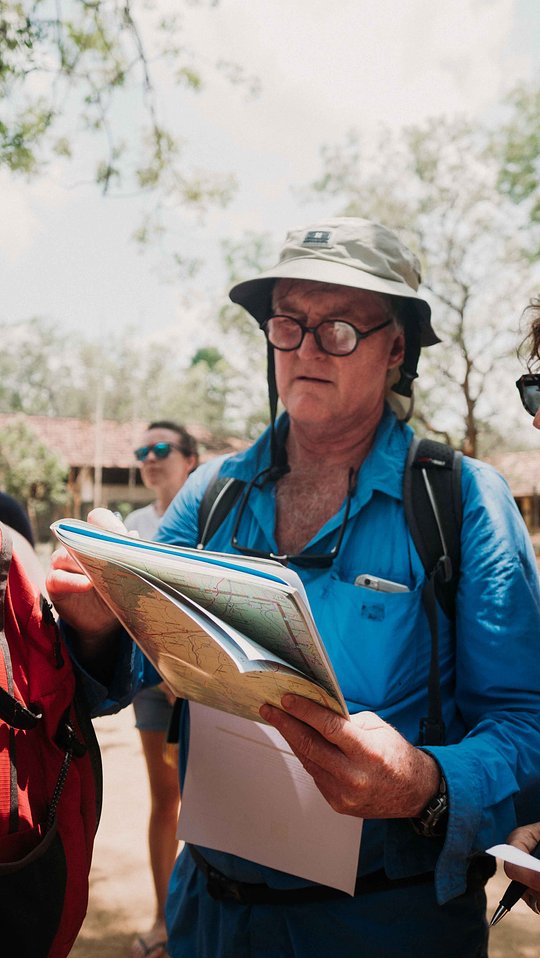
Challenges
The essence of our Tuk-Tuk adventure lies in the challenges that await. It's not just about reaching your destination but how creatively and effectively you navigate the hurdles along the way. Accumulate points through a series of tasks that test your wit, courage, and teamwork. From wildlife photography to local culinary challenges, each task is a step towards victory, but remember, it's the adventure that counts, not the speed.
These challenges are designed to immerse you fully in the Cambodian experience, ensuring that every moment is filled with discovery, laughter, and a sense of achievement that goes beyond the ordinary.
What´s Included
What's Included
✔ Training and driving lessons on arrival day.
✔ Half-board. Delicious locally-made breakfasts and dinners at hotels.
✔ Hire and use of one genuine, ready-to-go vehicle during the challenge.
✔ Accommodation for all nights in double or twin rooms.
✔ Challenge Logistics & Legal Stuff - Mechanics, Support Team, Permits, Luggage Truck & Backup Medical Support.
✔ Welcome pack (sim card and phone, map, t-shirt, event bag, phrase-book & navigational sheets).
✔ Awards ceremony & farewell party.
✔ 5 % contribution to our Meaningful Travel projects.
What's Not Included
✘ Flights, visas, airport transfers.
✘ Day to day costs (lunch, dinner, drinks & gratuities)
✘ Spare parts and repairs (approx. total £40-120 per team).
✘ Fuel (approx. total £100 per team).
✘ Travel Insurance
Testimonials
Check out what others have said about our Sri Lanka Tuk-Tuk Adventure.
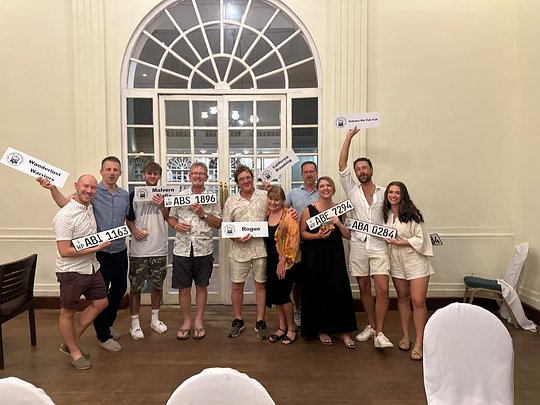
Can a 10 day trip to Sri Lanka in a Tuk Tuk be something special? Well LM you made it special. I was introduced to the concept by a friend who did it with another company who did not provide pre booked accommodation, daily routes, challenges and support etc. The LM concept works brilliantly and I genuinely find it hard to fault or make recommendations for improvement! The LM crew on the trip were fantastic, the challenges were creative and interesting, The 'cricket challenge' for two mad cricketers was a stroke of genius from Mark. I will never forget the smile on Tobys (my son) face when we left the cricket field. Neither will I or he forget the time he had in Ella. It was a wonderful way to see a country, and the SL people are incredible. I would love to do another adventure with LM. Thank you so much for delivering an incredible 10 days that neither of us will ever forget.
David. S, Team Malvern Mafia
⭐⭐⭐⭐⭐
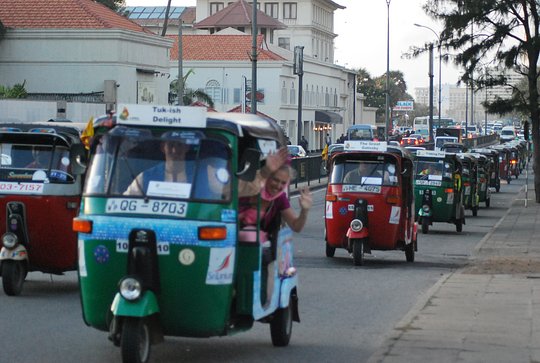
“The Lanka Challenge is in my top 5 trips of a lifetime, without a doubt. If you're considering traveling with Large Minority, do yourself a favor and book right away! The ingenious and very well thought-out challenges, stunning destinations, wonderful locals and brilliant fellow travelers made this a trip to remember - and to repeat. I went on the Lanka Challenge in August 2016 with two girlfriends and I'm hoping to book the Philippines Challenge soon with my fiancé.”
Giulia R.
⭐⭐⭐⭐⭐

“The best way to see a country! Adventure, excitement, laughter, education, and tons of fun. Lanka and Cambodia were some of the best trips I've ever been on. Highly recommend these guys!”
Natasha T.
⭐⭐⭐⭐⭐
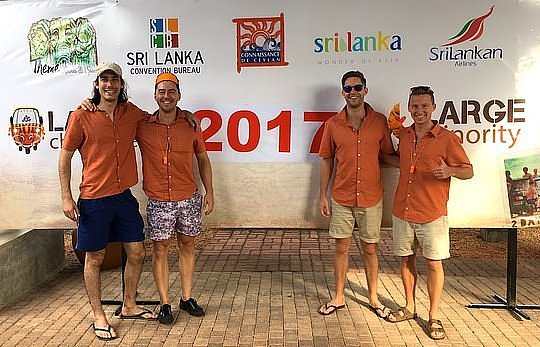
The guys have this trip down to a fine art. During our travel we were far enough off the beaten track to feel this was a proper adventure but also supported just the right amount to know that if we really needed something we would be supported.
Nicholas Tyral, Team TNT-oi
⭐⭐⭐⭐⭐
Don't take our word for it...explore reviews and insights from past travelers on trusted platforms like Google My Business, TravelStride, and Tourradar.

In the Unfortunate Event of a Breakdown
What is a Tuk-Tuk?
The Tuk-Tuk, also known as a rickshaw, is a unique vehicle that requires careful handling and maintenance. While our team works tirelessly to ensure the safety and reliability of our fleet, it´s important to note that Tuk-Tuks are delicate machines that can experience mechanical issues or breakdowns due to improper handling or poor road conditions.
We take great pride in providing our customers with an authentic and adventurous travel experience, and part of that experience is accepting the risks and challenges that come with driving a Tuk-Tuk.
In the event that a Tuk-Tuk does experience mechanical issues we have mechanics on hand and, depending on the nature of the breakdown, it may be the responsibility of the driver to repair the vehicle at their own expense.
We understand that this may be an inconvenience, but we believe it is a fair price to pay for the thrill and excitement of Tuk-Tuk travel.
So, if you´re ready to embark on a one-of-a-kind adventure, just remember to drive carefully, follow our safety guidelines, and embrace the challenges that come with this unique mode of transportation.
After all, it's all part of the adventure!
FAQs
The Tuk-Tuk
Ah, the humble Tuk-Tuk. The ride so nice they named it twice. These are standard issue, Indian-made, Sri Lankan-modified Tuk-Tuks.
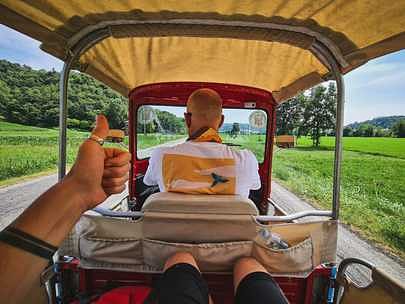
They’ve got three wheels (don’t ask us why), an open frame, a canvas roof with drop down sides, a cabin for the driver and two seats in the back. Oh, and an engine: a 4-stroke beast that is probably slightly more powerful than a horse.
Tuk-Tuks have a few advantages: they’re durable, easy to use and very forgiving. They’ll happily handle almost any surface, climate or level of abuse. Their cruising speed is a tasty 35kph (22mph). Their cruising altitude is about one foot.
Warning: Tuk-Tuks can easily roll and flip if not handled correctly. We take safety really seriously on these challenges, and you should know there are inherent risks involved, including potentially life-threatening situations.
Specifications
- Engine: 4 stroke engine – 200 cc
- Petrol tank: 6 litre normal capacity plus 1 litre of reserve
- Average petrol consumption: 1 litre approx 20 to 25 Km’s
- Top speed: 55 kmph
How does it work?
For a comprehensive answer, go and Google ‘internal combustion engine’. But here are the cliffnotes.
- The accelerator is found on the right.
- The clutch and gears are located on the left.
- The main break is actioned by your right foot.
On the first day of the event, everyone is required to attend a mandatory tuk tuk driving induction and safety training session (this means you). You’ll get enough lots of time to practice before hitting the road. A rickshaw is a cross between a car and a scooter, so clutch control is key. If you´ve driven a scooter or motorbike before, it’ll be a breeze.
It’s worth remembering that the Lanka Challenge is just that – a challenge. The Lanka Challenge is not a race. It’s not like Cake’s seminal 90s hit The Distance. Speed should not be your priority. If anything should be, it’s probably fun.
Legs and Challenges
The Challenge is broken up into various driving legs. Each team gets a road map and a daily navigational sheet, which they’ll use to get from A to B each day. The winning team isn’t necessarily the team that finishes first, it’s the one that accumulates the most Challenge points. How do you get points? By nailing various challenges, we set you along the way.
That means that racing is not really encouraged. In fact it’s actively discouraged. There’s no need to set a new ground-speed record (very difficult to do on a 200cc tuk tuk, but still…) We’ll provide mechanical support when you need it, but essentially you’re hiring a tuk tuk and driving it independently each day. By yourself. Han solo.
How many people per team?
You can join as a solo driver , team of 2 or team of 3.
Is there an age limit?
Yes, you’ve got to be at least 18 years old in order to compete. We don’t have a maximum age, but if you’re over 65 we definitely recommend checking with your insurer to make sure you qualify for the medical insurance you’ll need to take part. The Challenge is pretty physically tough – we won’t sugar-coat it. You should really only take part if you’re in good physical shape and your health is A-Okay.
What should I bring along?
Probably not your ski jacket. Or that set of golf clubs. Cambodia is a tropical country, so pack accordingly. The nights can get a little cooler during the dry season (November–February), so a light layer or windbreaker wouldn't go amiss — and you'll also want something with sleeves for visiting temples, where covered shoulders and knees are required out of respect.
Other than that, bring all your travel essentials, good quality sunscreen, and anything you think will make the long tuk-tuk days more fun (we recommend honing your I-Spy skills beforehand).
How about luggage?
Don’t worry, you don’t have to strap suitcases to the roof of your tuk tuk. We’ve got a luggage truck that will follow us around. Each morning you’ll load it up with your heavy bags, and each night we’ll hand it back at our hotel. For the camping nights, we recommend bringing a smaller bag to act as a day pack.
How on earth am I going to drive a Tuk-Tuk?
Don’t stress, they’re very friendly. If you can ride a bicycle that has a clutch and an engine, you can ride a tuk tuk. Besides, on the first day everyone gets mandatory tuk tuk driving instruction and safety training. You’ll have plenty of practice before hitting the open road.
How fast do Tuk-Tuk's go, and is it going to be dangerous?
Whoa there, speed racer. These bad boys can't really get over 50kph, with an average cruising speed of around 35kph. Fast enough to get the blood racing, but not so fast you'll hit a cow. That's the sweet spot.
To put it bluntly — yes, there is an element of danger. You're sitting behind the handlebars of a three-wheeled vehicle on 200cc of raw power, tackling unfamiliar roads in a foreign country. That in itself is a bit risky. But if you're sensible and cautious you should be fine, and we have a fully trained crew ready to swing in if anything goes wrong — including an ambulance and paramedics on standby throughout the event.
A word of warning: tuk-tuks can roll and flip if not handled correctly. We take safety seriously and want you to go in with eyes open — there are inherent risks involved in this kind of adventure, including potentially life-threatening situations.
What about insurance?
Travel insurance is a must-have — in fact it's a condition of entry. Make sure your policy covers emergency medical treatment for the duration of the trip and, crucially, that it includes cover for driving a tuk-tuk. It's also worth having cover for luggage loss and flight cancellation while you're at it. We'd suggest taking a look at Campbell Irvine or SafetyWing as starting points.
Third party insurance is included under the hire of the tuk-tuk. Scratch as many Ferraris as you want. (Please don't actually do this.)
As for vehicle damage — one of our registration requirements is a refundable deposit of $1,500 per team, either paid upfront or blocked on a credit card. This covers most touch-ups and accidents, although if the tuk-tuk is a complete write-off the bill might increase. At the end of the Challenge we'll inspect the vehicle, come to an agreement, and return any balance before you leave Cambodia. A pretty standard car-hire type system, really.
Do I need a special drivers license?
Everyone who competes has to provide us with a valid Driving Licence (DL) from your home country along with a International Driving Permit. We will also need digital copy of your passport so we can apply for a local licence on your behalf. This is included in the price.
Sorry to be old bossy boots, but if you show up and can’t produce a Driving Licence or an International Driving Permit, we can’t let you compete (we also reserve the right to without a refund).
What about fuel and maintenance?
These wonderful machines are surprisingly fuel efficient — unless you drive like a madman, your tuk-tuk will do at least 30km to the litre, so you won't be spending more than a few dollars on fuel for the whole Challenge.
Your humble steed will be handed over in roadworthy condition and from that point it's your responsibility to take care of any repair costs. Don't panic though — our mechanics will be with you throughout the event and can help sort most things at a reasonable cost, and if needed the locals are remarkably resourceful too. Spare parts are generally cheap and easy to find.
The cost of repairs depends on how well each team looks after their vehicle. There's naturally a small amount of wear and tear on adventures like this, but you'll only ever be charged for parts that are actually damaged or need replacing. A full vehicle inspection is carried out before handover so everything is documented. On average, repair costs run to somewhere between $40–120 per team.
How do I register?
Easy peasy. Here’s how:
- Sign up.
- Pay your initial deposit.
Once you’ve done all that successfully, we’ll send you an email with lots of exclamation marks confirming your team’s availability.
Once I register what other docs do I need?
As soon as your registration is locked and loaded, we’ll email you and ask you to provide us with:
- A passport copy for each team member (we promise not to laugh at the photos).
- International Driving Permit with a category A or B stamp.
- Your arrival and departure details.
We’ll double check all these docs on the ground in Sri Lanka, so please bring copies with you.
Do I have financial protection when booking a challenge with you?
No. If you have any concerns regarding this we do offer post payment options so please contact us directly for more information regarding this.
Who needs a visa to Cambodia
Ah visas, our old nemesis. You can find out the full list, and how to apply, here.
Can the route change?
We try to stick to the original route and accommodation as much as possible, but they can be subject to change from time to time.
Is it expensive in Cambodia?
Not really. Some luxuries can be a little pricey (hence the 'luxury' bit), but for the most part it's super reasonable. Lunch might be a few dollars and beers are generally under a buck. It's like travelling back in time to a simpler era — just don't expect the roads to always agree with you.
Religion?
Buddhism — and lots of it. Around 95% of Cambodians practice Theravada Buddhism, which shapes everything from daily life to the incredible temple architecture you'll be riding past (and into). You'll see monks in saffron robes, roadside shrines, and morning alms-giving ceremonies if you're up early enough.
If in doubt, just smile and be friendly.
What languages are spoken in Cambodia?
Khmer is the official language and what you'll hear everywhere — from the markets to the villages. English is reasonably well spoken in tourist areas and among younger Cambodians, but in rural communities you'll likely draw a few blank stares. That's half the fun.
You've brushed up on your Khmer, right?
What’s the weather like?
If you like your weather warm, you'll love Cambodia. Warmth is kind of its thing. Even when it's pouring with rain.
There are plenty of more in-depth weather guides online, but generally Cambodia has two seasons to know about: the dry season (November to April) which is the most popular time to visit, and the wet season (May to October) when the monsoon rolls in. The wet season isn't necessarily a dealbreaker — showers tend to be heavy but short, and the landscape turns an incredible green. Expect temperatures anywhere from 25 to 35 degrees Celsius year round, with humidity to match.
Do I need to get vaccinated?
This is completely up to you (and your doc), but generally it’s a good idea to be up-to-date with standard vaccinations like Tetanus, Hap A and Polio. Other jabs to consider are Tuberculosis, Meningitis and Typhoid. Anti-malaria meds might also be a good idea. If in doubt, check with your GP.
For more info, click here.
What are the roads like in Cambodia?
Cambodia has improved its road network a lot in recent years, linking the major cities and towns. But don't go expecting pristine tarmac everywhere you ride. Some of the rural roads in particular can get pretty wild and bumpy — and that's half the adventure. Tuk-tuks were basically built for this.
Payment Method & Terms
- Only 20% deposit required to signup.
- Outstanding amount is required 60 days before the start of the Challenge.
Cancellation Policy
- 60+ days before the challenge starts: Loss of deposit
- 59-45 days before the challenge starts: 50%
- 44 days or less before the challenge starts: 100%
For more information please refer to our Booking Terms & Conditions.